Page 1 sur 2
[E60N N53 Pr05/09] À-coups au ralenti à chaud
Publié : dim. 1 mars 2020 12:22
par Thoma
Bonjour,
Après avoir fait un long trajet 300km sur autoroute, la première fois que je suis repassé à bas régime j'ai constaté des à-coups et une irrégularité du régime.
Le problème n'existe qu'à chaud, à froid tout semble normal.
Voici deux liens montrant la différence de comportement :
Une révision complète a été faite il y a moins de 5000km, huile, filtre à huile, filtre à air et bougies ont été changés.
Auriez-vous des pistes à explorer à me suggérer ?
Merci pour vos idées
Thoma
Re: [E60N N53 Pr05/09] À-coups au ralenti à chaud
Publié : dim. 1 mars 2020 19:17
par darkgyver
Re;
Normalement on peut voir la température réelle du moteur pendant son fonctionnement au TDB. (dans les menus)
As tu regardé cette valeur quand tu avais des ratés?
@++
Re: [E60N N53 Pr05/09] À-coups au ralenti à chaud
Publié : dim. 1 mars 2020 19:30
par Thoma
La température se promène entre 85° et 105°...
Je vais refaire un essai dès mon retour de déplacement.
D'ailleurs, est-ce normal que la température de LDR varie autant ?
Re: [E60N N53 Pr05/09] À-coups au ralenti à chaud
Publié : lun. 2 mars 2020 09:14
par darkgyver
Re;
ce modèle a le thermostat cartographique je crois
Il est donc normal que la température varie beaucoup.
par contre 105 est un poil de trop!
normalement; elle devrait varier de 75 à 103 je crois....
je vérifie; car ce véhicule a aussi une pompe à eau électrique à débit contrôlé
regarde à quelle température elle pose prob....
As tu touché à la pompe à eau?
son remplacement prvoit une procédure un peu spéciale
le mieux serait de passer par la valse pour voir si elle ne chauffe pas trop (ou que la DME pense qu'elle chauffe trop) .... dans ce cas, la DME pourrait mettre le moteur en sécurité
les stores en sortie de radiateur s'ouvrent ils?
@++
Re: [E60N N53 Pr05/09] À-coups au ralenti à chaud
Publié : sam. 7 mars 2020 18:24
par Thoma
Bonjour,
J'ai utilisé le véhicule aujourd'hui mais le trajet était trop court pour arriver à la température maximum. Je ne suis monté qu'à 95°C.
En ce qui concerne les à-coups, ils apparaîssent lorsque le LDR dépasse 70°C.
Pas d'intervention sur le circuit de refroidissement depuis que j'ai le véhicule.
Je vais voir pour passer à la valise.
Les stores en sortie de radiateur ??? À quoi cela ressemble ?
Merci
@+
Thoma
Re: [E60N N53 Pr05/09] À-coups au ralenti à chaud
Publié : dim. 8 mars 2020 17:46
par smeldeplomb
je ne penses pas que tu ai des stores sur ton modele
as tu l attache remorque d origine ??
Re: [E60N N53 Pr05/09] À-coups au ralenti à chaud
Publié : dim. 8 mars 2020 17:49
par Thoma
Bonjour,
Oui, celui qui est escamotable électriquement.
Thoma
Re: [E60N N53 Pr05/09] À-coups au ralenti à chaud
Publié : lun. 9 mars 2020 11:05
par darkgyver
C'est bizarre.... sur mes plans (version US) avec moteur N53, les stores y sont
mais quand je vais sur ton ETK, on ne les voit pas!
peux tu prendre une photo de l'arrière (côté moteur du radiateur?
https://www.origines-parfums.com/fr/azz ... -homme.htm
sinon:
trs à coups,
dans quelles conditions?
uniquement la reprise (à forte charge= forte accélération) en deuxième et en troisième au couple maxi?
si c'est uniquement au ralenti à chaud, ce sont des tarés....
@+
Re: [E60N N53 Pr05/09] À-coups au ralenti à chaud
Publié : lun. 9 mars 2020 13:08
par Thoma
Bonjour,
Il me semblait que le N53 n'avait jamais été vendu aux US (une histoire de teneur en soufre d'après Wikipédia).
De quoi ont l'air ces stores ?
C'est difficilement accessible mais voilà ce que l'on voit depuis le haut du ventilateur.
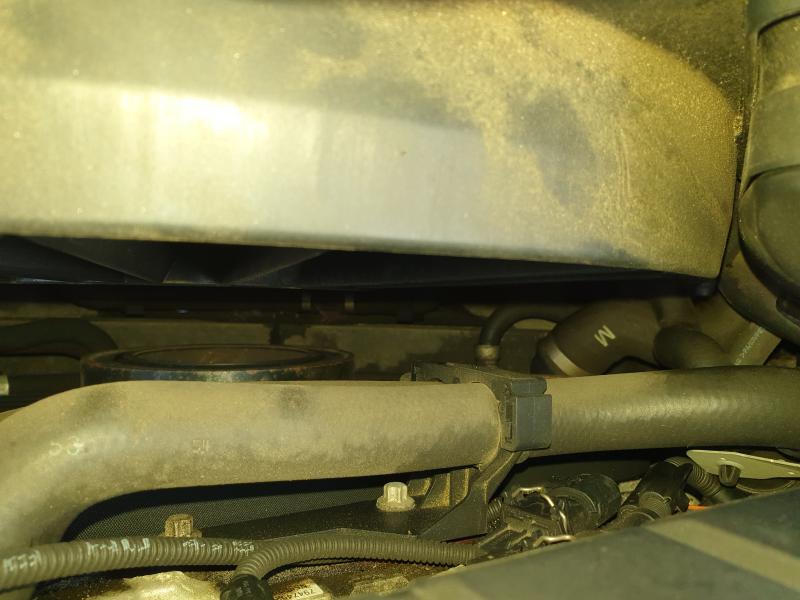
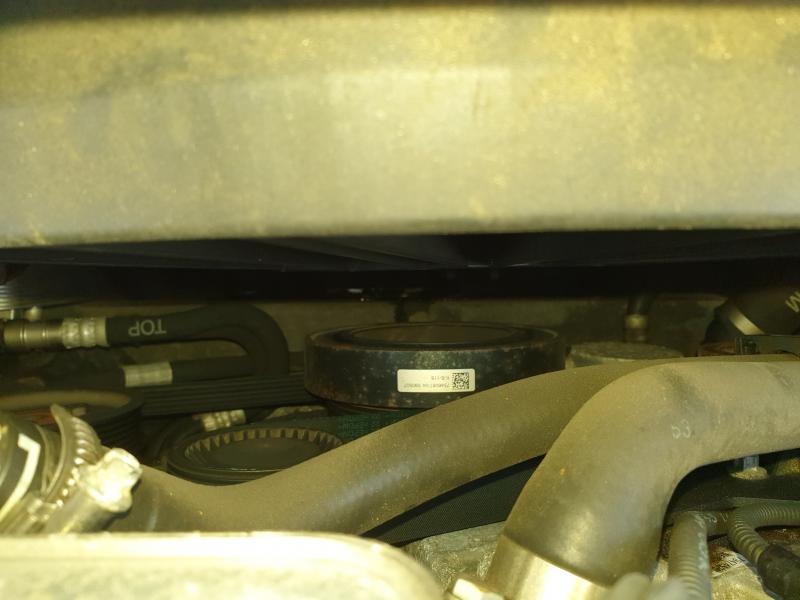
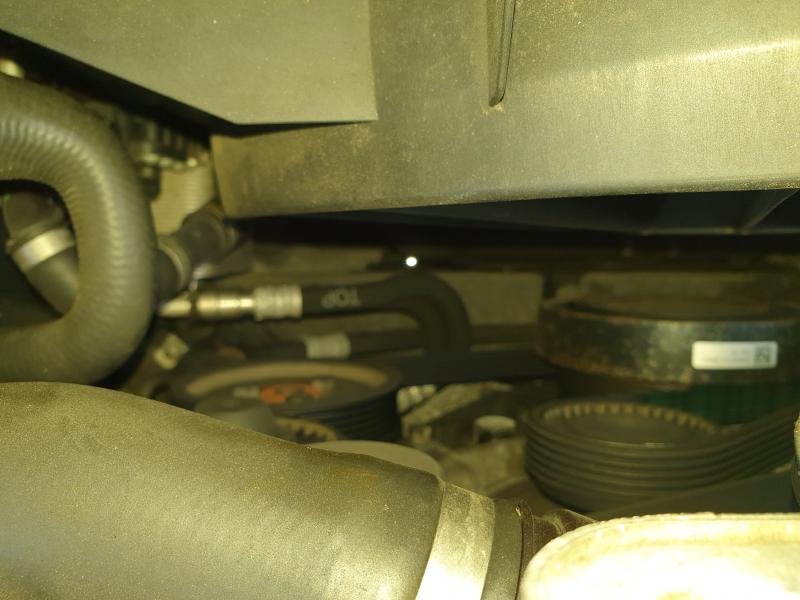
Faut-il un autre point de vue ?
Donc ce sont des ratés car je n'ai pas l'impression de les subir au-dessus de 1000tr/min.
@+
Re: [E60N N53 Pr05/09] À-coups au ralenti à chaud
Publié : mar. 10 mars 2020 12:06
par darkgyver
a titre info
Persienne de radiateur
Le volet de radiateur isole le compartiment moteur par rapport à l'extérieur et ne permet pas à l'air frais de pénétrer dans le compartiment moteur en traversant le radiateur.
En cours de route, la fermeture du volet de radiateur raccourcit la phase de montée en température du moteur. A grande vitesse, le coefficient aérodynamique Cx du véhicule est ainsi amélioré. Il en résulte une économie de carburant et de ce fait un avantage au niveau des émissions polluantes. De plus, l'échauffement plus rapide du liquide de refroidissement permet d'exploiter plus tôt la puissance de chauffage du véhicule.
Composants
Persienne de radiateur
Contacteur électromagnétique
Fonctionnement
A la coupure du contact ou dans le cas d'une coupure du câble de commande, le volet de radiateur n'est pas verrouillé. Après le démarrage du moteur, le boîtier électronique moteur commute le contacteur électromagnétique à la masse et empêche ainsi l'ouverture du volet de radiateur.
Le verrouillage magnétique du volet de radiateur est supprimé dès que l'une ou plusieurs des conditions suivantes sont réunies en cours de route.
température du liquide de refroidissement > 90°C
Température d'huile de la boîte de vitesses > 110°C
Température de l'huile moteur > 130°C
Alimentation en courant du thermostat cartographique > 90% (seulement DME)
Ventilateur électrique actif
Défauts en mémoire
En cas d'apparition d'un défaut électrique au niveau du composant, le verrouillage du volet de radiateur est supprimé.
Il y a également désactivation du verrouillage du volet de radiateur à la détection d'un défaut sur la sonde de température du liquide de refroidissement ou sur le ventilateur électrique.
je regarde le reste...
Re: [E60N N53 Pr05/09] À-coups au ralenti à chaud
Publié : mar. 10 mars 2020 12:11
par darkgyver
N53 pour les E93, mais le principe est le même!
Stratified-charge operation with direct fuel injection
Stratified-charge operation with direct fuel injection
Stratified-charge operation (lean mixture) is described using the N53 6-cylinder engine as an example. The new N43 4-cylinder petrol engine also has stratified-charge operation.
The basis of construction for the N53 (e.g. N53B30O0) is the N52. In the same way as the N54, the N53 has direct fuel injection. However, the N53 is not charged. Moreover, the N53 is operated with stratified charge (lambda value up to 2.5) in wide operating ranges. The 6-cylinder engine has been developed for the European market (ACEA: Association of European Automobile Manufacturers). The exhaust system has a nitrogen oxide catalytic converter.
The beamed direct fuel injection (HPI: High Precision Injection) delivers additional levels of autonomy:
for measuring the fuel injection rate and fuel injection period (multiple fuel injection depending on load and speed up to 3 times)
for mixture distribution in the combustion chamber
This enables a positive influence on the power output, engine torque, consumption and pollutant emissions.
With stratified-charge operation, efficient dynamics (BMW marketing term: EfficientDynamics) reach a new level. The engine develops its performance potential with reduced fuel consumption.
Brief description of components
The following components are described:
Cylinder head with direct fuel injection
Fuel injectors
Nitrogen oxide catalytic converter with nitrogen oxide sensor as well as exhaust gas temperature sensor
Cylinder head with direct fuel injection
In the case of direct fuel injection, the injector is located centrally between the valves and in the immediate vicinity of the spark plug. In this position, the injector, which opens outwardly, can distribute the fuel in a ring (hollow cone) and very evenly in the combustion chamber. This enables not only more exact mixture metering, but at the same time a cooling effect. This permits greater compression and thus optimizes the efficiency of the combustion process.
Index
Explanation
Index
Explanation
1
Injectors
2
Cylinder head
3
Pistons
4
Combustion chamber
5
Spark plug
6
Ignition Coil
Fuel injectors
The injector sprays the fuel into the combustion chamber under high pressure. The injector opens the tip of the nozzle needle outwards and forms a ring gap that is up to 40 micrometres wide. The ring gap shapes the beamed direct fuel injection and ensures even divergence through a hollow cone. The piezo-electric activation has the following advantages compared to activation via solenoid coils:
improved possibilities for multiple fuel injection due to rapid switching times with very short dead times.
This results in significant improvements with regard to pollutant emission as well as fuel consumption.
Index
Explanation
Index
Explanation
1
Injectors
2
Rail pressure sensor
3
Rail
4
Fuel low pressure sensor
5
Flow regulating valve
6
High-pressure pump
A piezo element is an electromechanical converter. The piezo element is a type of ceramic that converts electrical energy directly into mechanical energy (power/travel). The piezo element expands when voltage is applied. This creates the lift of the nozzle needle. To achieve a greater lift, a piezo element can be structured in a number of layers.
Index
Explanation
Index
Explanation
1
Piezo element without voltage
2
Layers of piezo elements
3
Piezo element, voltage applied
Nitrogen oxide catalytic converter with nitrogen oxide sensor as well as exhaust gas temperature sensor
Nitrogen oxide is the generic term for the various compound of nitrogen and oxygen. Nitrogen oxides form as a consequence of secondary reactions in all combustion processes with air, which contains nitrogen. The nitrogen is not involved in the actual combustion of the carbon. The temperatures and pressure that occur in the combustion chamber, however, lead to oxidation reactions with oxygen in the air. This creates mainly nitrogen monoxide (NO) and nitrogen dioxide (NO2) as well as to a minor degree di-nitrogen oxide (N2O).
The higher the temperatures are and the more air is in the combustion mixture, the greater the proportion of nitrogen oxide that forms. This is why engines with stratified-charge operation must be equipped with a nitrogen oxide catalytic converter.
Index
Explanation
Index
Explanation
1
Oxygen sensors (control sensors)
2
Nitrogen oxide sensor
3
Exhaust flap
4
Nitrogen oxide catalytic converter, cylinder bank 2
5
Nitrogen oxide catalytic converter, cylinder bank 1
6
Exhaust gas temperature sensor
7
3-way catalytic converter, cylinder bank 2
8
Oxygen sensors (control sensors)
9
3-way catalytic converter, cylinder bank 1
The structure of the nitrogen oxide catalytic converter is similar to that of a 3-way catalytic converter. A precious metal with catalytic effect and a material for intermediate storage of the nitrogen oxides are applied to a substrate. The nitrogen oxide catalytic converter works in a temperature range of 220 °C to 450 °C. In this temperature range, it is possible to store and regenerate nitrogen oxides. For desulphurization, an even higher temperature range of 600 °C to 650 °C is required. These temperature ranges are monitored by the exhaust gas temperature sensor. The engine management system (MSD80) controls and monitors the regeneration. To do so, the engine management system uses a calculation model and the measured values of the nitrogen oxide sensor.
The nitrogen oxide sensor consists of the measuring sensor itself and an associated electronic evaluation unit. The electronic evaluation unit communicates across the Local-CAN (local CAN bus) with the engine control module.
Index
Explanation
Index
Explanation
1
Nitrogen oxide sensor
2
Electronic evaluator
The operating principle of the nitrogen oxide sensor is comparable to that of a broadband oxygen sensor. However, it measures nitrogen oxide. The measurement procedure is based on deriving the actual nitrogen oxide measurement from an oxygen measurement. The nitrogen oxide sensor is inseparably connected to the electronic evaluation unit.
System functions
The following system functions are described:
Stratified-charge operation
Storage and regeneration of the nitrogen oxide catalytic converter
Stratified-charge operation
Note! Explanation of the term stratified charge.
Stratified charge is a process for petrol engines. Fuel is injected in such a way that in the area the spark plug an ignitable mixture (lambda value = 0.5 to 1.0) is created. The remaining combustion chamber has a very lean, non-ignitable mixture (lambda value = 1.5 to 2.5).
With direct fuel injection, the injector flows directly into the combustion chamber. The combustion air is taken in virtually unthrottled (via the throttle valve). The fuel is only injected at an advanced stage, during the compression stroke. A ring of ignitable mixture is only created in the area of the spark plug. The main part of the combustion chamber is filled with air and residual gases. The air surplus leads to a composition of emissions where no reduction in the nitrogen oxides in the exhaust gas is possible with a conventional 3-way catalytic converter. This is why a nitrogen oxide catalytic converter is required.
Operation with stratified charge is not possible across the entire operating range of an engine. The following physical limit ranges result:
With increasing load, the injected volume of fuel must increase. The area around the spark plug with ignitable mixture becomes larger.
As the speed increases, there is less time available for the load change and mixture formation.
Index
Explanation
Index
Explanation
1
Extended stratified-charge operation:
lambda value very much greater than 1
2
Transition range:
lambda value almost greater than 1
3
Homogeneous operating range:
lambda value = 1
Storage and regeneration of the nitrogen oxide catalytic converter
The storage capacity of the nitrogen oxide catalytic converter is limited. When the storage material is completely saturated, no more nitrogen oxide can be absorbed. The engine management system detects this saturation as follows:
With a model-based method, the amount of stored nitrogen oxides (NOX) is calculated. The following are taken into account:
Temperature of the nitrogen oxide catalytic converter
Past driving profile
Stored value for thermal ageing of the nitrogen oxide catalytic converter
The nitrogen oxide sensor downstream of the storage catalytic converters detects nitrogen oxides in the exhaust flow. The nitrogen oxide sensor delivers the signal to the engine management system.
Index
Explanation
Index
Explanation
1
Nitrogen oxide catalytic converter
2
Storage material (barium)
3
Nitrogen oxide sensor
When a maximum storage volume of the storage catalytic converter is determined, the engine management system initiates the regeneration of the nitrogen oxides. To do so, the mixture is slightly enriched (lambda value = 0.8). During the regeneration the nitrogen oxides on the catalytic converter are converted. After the conversion, the enriched engine operation is terminated again. Her, too, a calculation model and the nitrogen oxide sensor are used. The nitrogen oxide sensor measures the oxygen concentration in the exhaust gas. A voltage jump from ”lean” to ”rich” indicates when the regeneration has been completed.
Notes for Service department
General information
Important: Fuel high pressure system!
Work on this fuel system is only permitted after the engine has cooled. The coolant temperature must not exceed 40 °C. Otherwise there is a risk of injury due to the residual pressure in the fuel high pressure system.
Note: Comply with repair instructions.
When working on the fuel high pressure system, pay particular attention to cleanliness. Even the smallest impurities and damage to the bolt connections of the high pressure lines can lead to leaks.
Diagnosis instructions
Note: Emergency program.
In the event of implausible exhaust emissions, the emergency program is started. In addition, the engine is operated with a homogeneous mixture.
There are 2 emergency programs: emergency program with 5 bar injection pressure and emergency program with 100 bar injection pressure.
Possible causes of the emergency program with 5 bar:
Implausible values of the sensors
Pressure limiting valve defective
Fuel through-flow too low
Possible causes of the emergency program with 100 bar:
Fuel through-flow too high (flow regulating valve jams)
Note: Service function 'Calibration of injector'.
If the engine control module or an injector is replaced, the printed code of each injector must be allocated to the right cylinder in the engine control module. Run the service function ”Injector calibration” on the BMW diagnosis system.
Note: Service functions 'nitrogen oxide catalytic converter'.
If the engine control module is replaced, the ageing and level of sulphurization of the nitrogen oxide catalytic converters must be transferred.
If the nitrogen oxide catalytic converters are replaced, the ageing and level of sulphurization must be initialized.
Note: Sulphurization of the nitrogen oxide catalytic converter.
Non-sulphur fuel contains a minimum of sulphur. The sulphur reduces the storage capacity of the nitrogen oxide catalytic converter. Sulphurization of the nitrogen oxide catalytic converter means that the engine is only operated with homogeneous mixture, as no nitrogen oxides can be absorbed. The engine management system detects the sulphurization of the nitrogen oxide catalytic converter. For desulphurization, the nitrogen oxide catalytic converter is heated to 600 °C to 650 °C and operated with a rich mixture (lambda value = 0.94).
The following vehicle operation is necessary to actively heat up the nitrogen oxide catalytic converter:
Driving speed greater than 110 km/h for 25 minutes
Fuel gauge higher than 50 %
In the event of a fault memory entry (NOx catalytic converter sulphurized), more frequent heating-up can be activated using a service function. This enabling remains active until the nitrogen oxide catalytic converter has been successfully desulphurized.
No liability can be accepted for printing or other faults. Subject to changes of a technical nature
Re: [E60N N53 Pr05/09] À-coups au ralenti à chaud
Publié : mar. 10 mars 2020 12:19
par darkgyver
Re;
question subsidiaire!
as tu l'impression qure le moteur Boite (aussi sur place)
ou
que la transmission donne des a coups? (en roulant dans les embouteillages!)
@+
Re: [E60N N53 Pr05/09] À-coups au ralenti à chaud
Publié : mar. 10 mars 2020 19:34
par Thoma
Bonsoir,
À l'arrêt et au ralenti, on ressent les à-coups dans le siège conducteur.
Effectivement, on les ressent aussi en roulant jusqu'à 1000tr/min environ.
C'est grave docteur ?
@+
Thoma
Re: [E60N N53 Pr05/09] À-coups au ralenti à chaud
Publié : mer. 11 mars 2020 10:23
par darkgyver
Re;
je ne sais pas!
pour l'instant, j'essayais de savoir si ce n'était pas possible que ce soit un prob de transmission!
mais si tu le sens aussi sur place, c'est que le moteur "boite"....
je réfléchis encore!
mais à priori, tu devras faire un scan avec une valise complète
@+
Re: [E60N N53 Pr05/09] À-coups au ralenti à chaud
Publié : jeu. 12 mars 2020 09:52
par darkgyver
Re,
Je ne vois pas....
je pense que sans valise, tu ne trouveras pas!
même avec valise, cela risque d^'être difficile!
@+
Re: [E60N N53 Pr05/09] À-coups au ralenti à chaud
Publié : mer. 1 juil. 2020 08:59
par Thoma
Bonjour,
Elle est passée chez le concessionnaire pour un autre sujet.
Les informations que j'ai obtenu sont :
* des ratés d'allumage sur les cylindres 4 et 5
* catalyseur NOX en fin de vie
Comme les bougies et les bobines ont été changées il y a moins de 5000km, je suppose que je vais avoir le droit au changement de deux injecteurs.
Et probablement un changement de catalyseur NOX dans la foulée.
@+
Thoma
Re: [E60N N53 Pr05/09] À-coups au ralenti à chaud
Publié : mer. 1 juil. 2020 12:49
par smeldeplomb
ou oxidation dans les prises de bobines ou dans la prise DDE
Re: [E60N N53 Pr05/09] À-coups au ralenti à chaud
Publié : jeu. 2 juil. 2020 13:59
par darkgyver
Re;
Après réflexion je pense que plutôt que de remplacer le cat ou je ne sais quoi, il faudrait voir ce qui influence les valeurs lambda
recyclage des vapeurs d'huile moteur (dont je n'ai pas trouvé le schéma pour l'instant)
mais dont le flexible 13 de ce plan doit être en excellent état
https://www.realoem.com/bmw/fr/showpart ... Id=11_4086
et fonctionnement de la vanne EGR
https://www.realoem.com/bmw/fr/showpart ... Id=11_3974
car les erreur d'allumage sur des cylindres "isolés" et non systématiques, sont très souvent signe que la régulation lambda est dans les choux!
et ceci plus particulièrement à chaud, car à froid elle n'intervient pas!
@]+
Re: [E60N N53 Pr05/09] À-coups au ralenti à chaud
Publié : lun. 27 juil. 2020 13:42
par Thoma
Bonjour,
Petite évolution, les ratés d'allumage sont présents en permanence essentiellement sur le banc 2. Il y en a très peu sur le banc 1.
Le flexible est bon. Par contre, comment tester la vanne EGR ? Et surtout, où se cache-t-elle ?
@+
Thoma
Re: [E60N N53 Pr05/09] À-coups au ralenti à chaud
Publié : mer. 29 juil. 2020 17:15
par david137000
Bonjour
Sur quels cylindres, as tu les ratées ?
a+